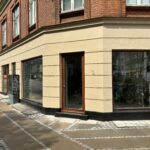
Storefront renovation at Åboulevard 48

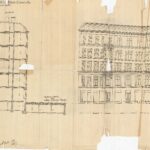
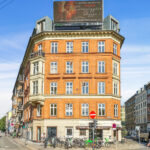
At Åboulevard 48 stands an impressive building from 1880, designed by master mason and architect Niels Olaus Mynster. As a mason, Olaus Mynster contributed to several of Copenhagen’s landmark buildings, including Copenhagen City Hall, the Central Post Building, and Magasin du Nord. Åboulevard 48 was his first project as an architect.


The property’s architecture is inspired by the Italian Renaissance, featuring elegant details such as the beautiful bay window and the grand cornice — one of the largest of its kind in the city.


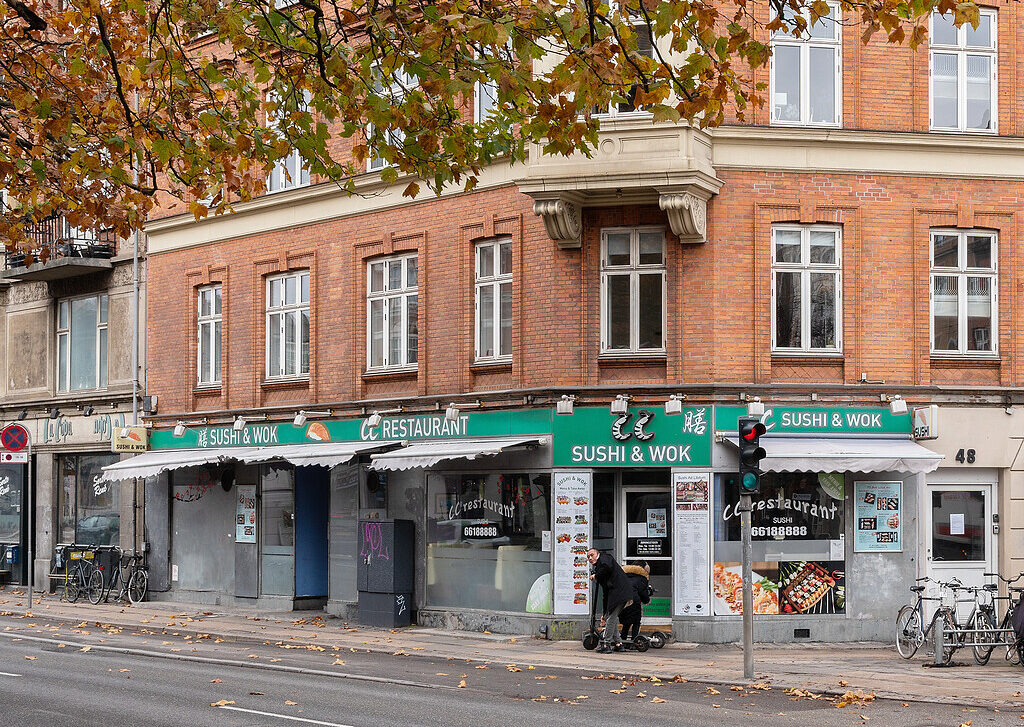
Like many Copenhagen buildings, the ground floor was originally designed for retail, and over the years it has hosted a wide variety of businesses. From Café Tramway in the early 1900s to an ice cream shop and bookstore in the 1930s – and later a tanning salon in the 1990s. Most recently, the ground floor has housed two restaurants, one of which, the popular Liban Cuisine, still occupies the space today.
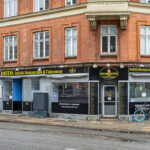
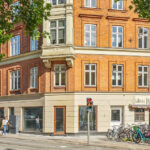
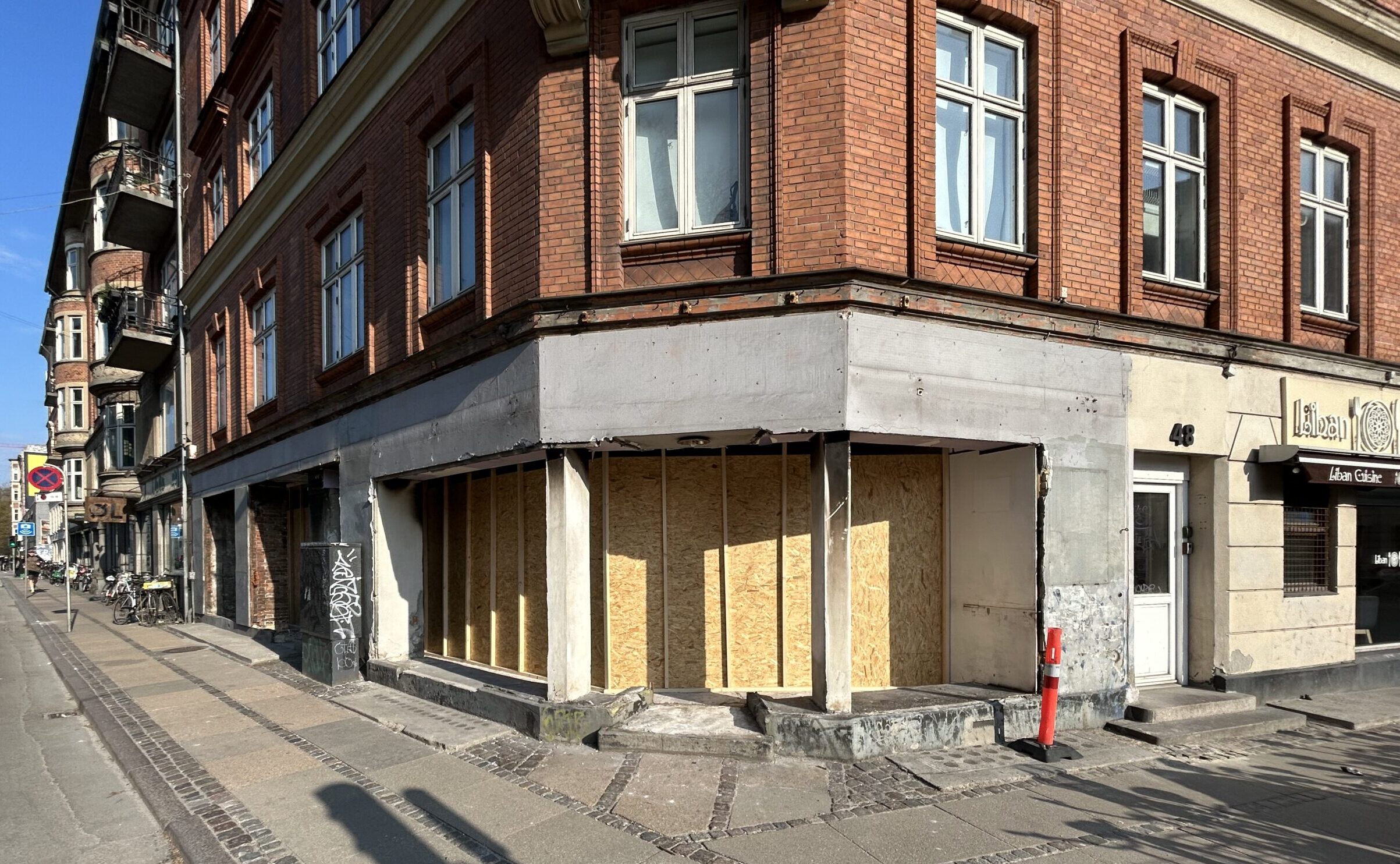
In the 1960s, the storefront façade underwent an extensive reconstruction that significantly altered the building’s appearance. The window openings were enlarged to meet the shops’ need for visibility, and part of the façade was recessed. The main entrance was redesigned in glass, and the building’s structural columns were concealed behind façade panels.

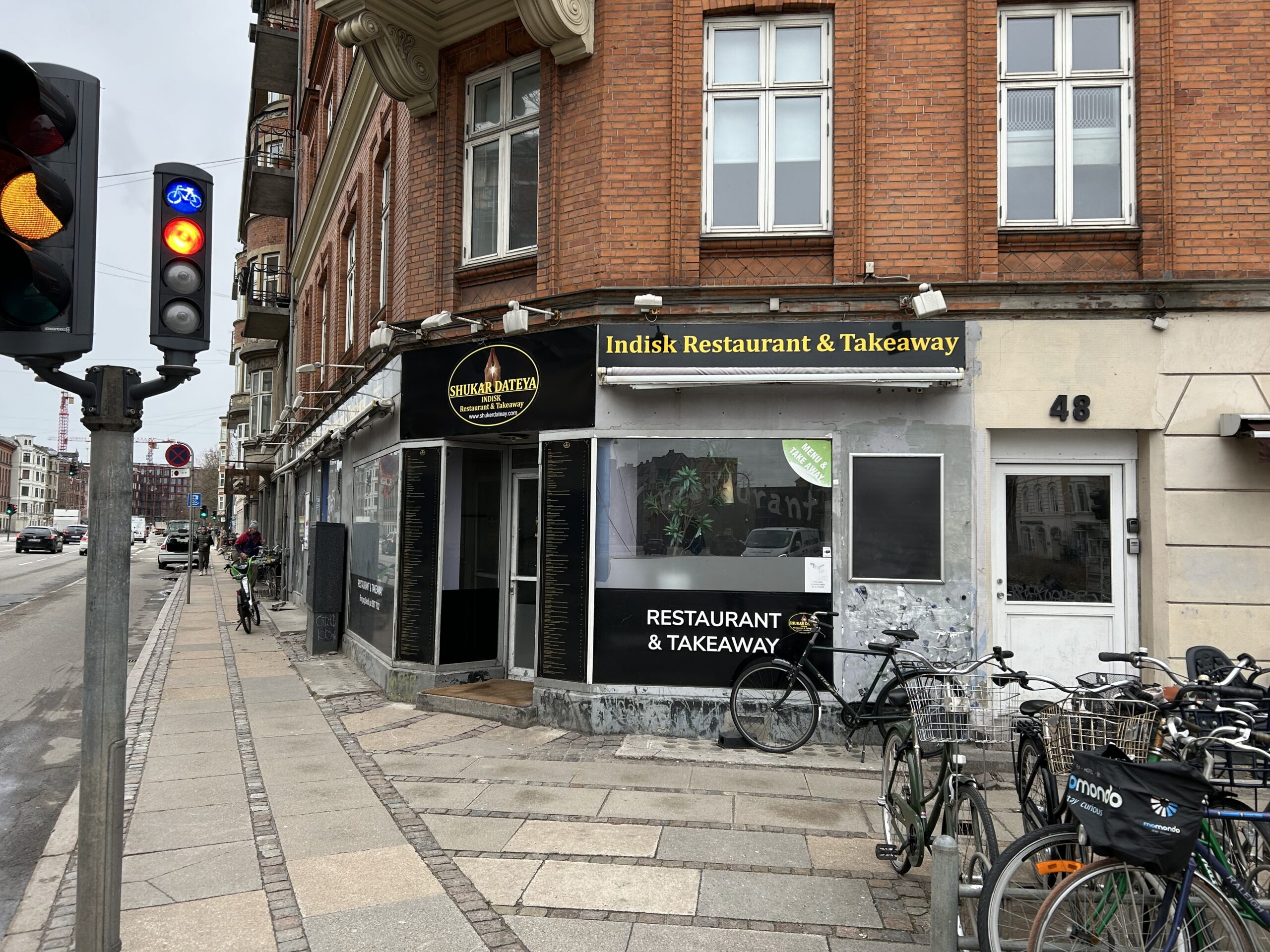
Both the reconstruction and the subsequent changes in commercial tenants gradually left their mark on the façade, resulting in a structure that appeared cluttered and inconsistent. The windows no longer aligned at the top, and the façade had taken on an appearance that failed to visually unify the two retail units within the building.

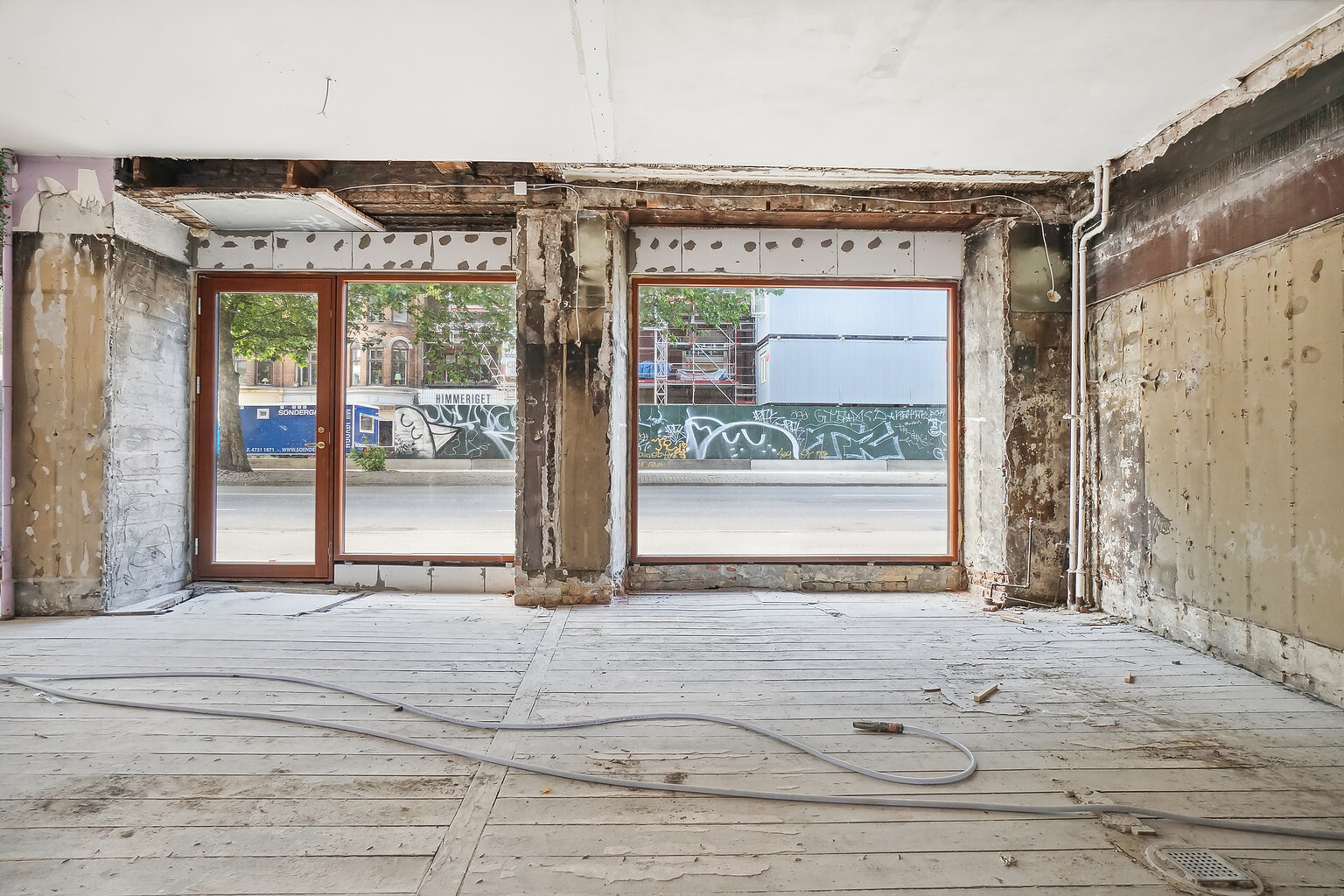
When the retail unit on the left side had been vacant for some time, a decision was made in spring 2024 to renovate both the unit and the façade. The goal was to create a modern and functional space for a future commercial tenant while also enhancing the building’s overall appearance. A multidisciplinary team of project developers, architects, and leasing specialists developed a plan where functionality and aesthetics go hand in hand.

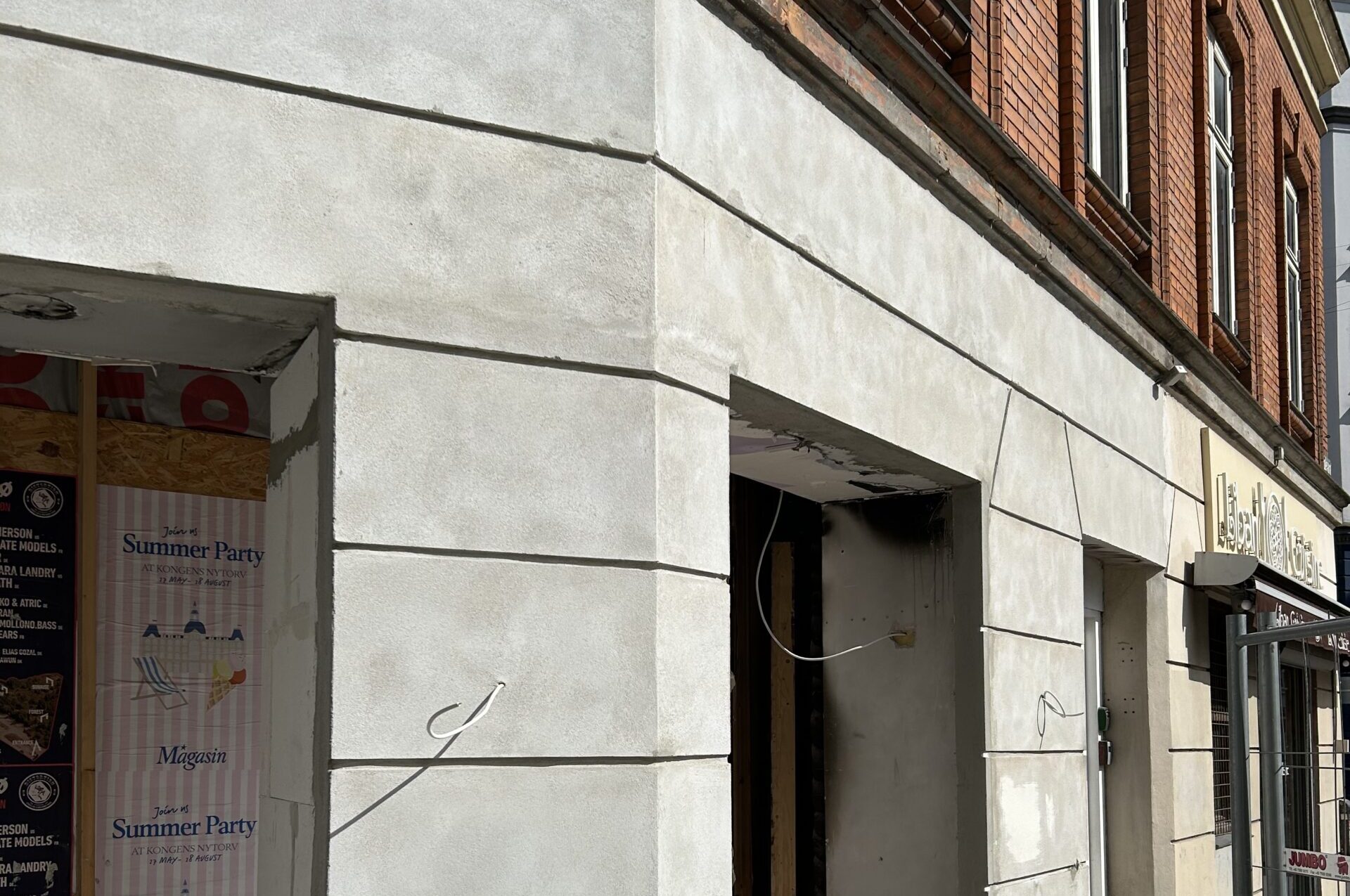
The façade renovation is inspired by Mynster’s original drawings, taking into account both the building’s historical appearance and the modern requirements for visibility and functionality expected by today’s commercial tenants.

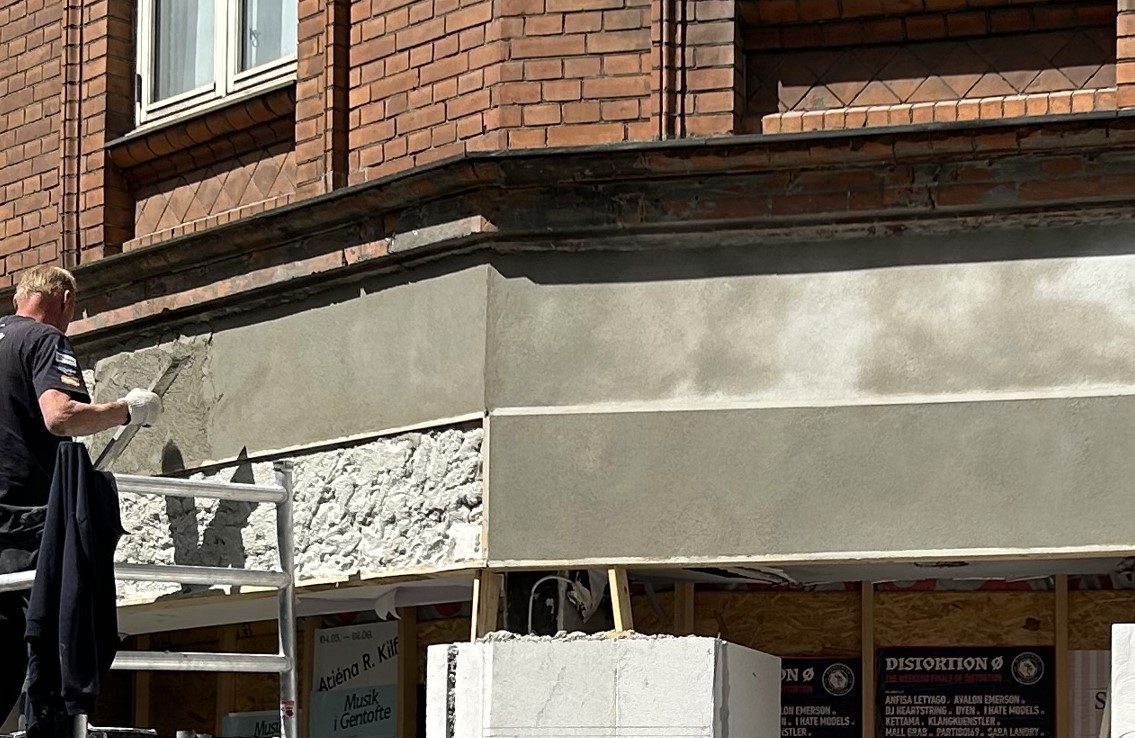
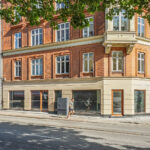
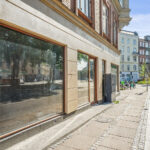
Columns have been reconstructed at the corner entrance, and the previously hidden structural pillars are now visible once again, restoring the building’s original character. The windows have been brought forward to align with the façade, and brickwork patterns have been reestablished to create symmetry and balance. In addition, mahogany-framed triple-glazed windows have been installed to improve energy efficiency while preserving the building’s aesthetic integrity. Inside, the left-side retail unit has been upgraded with modern facilities, completing the transformation.

The result is a modern commercial space with a unified façade that honors the building’s historical character while providing a refined architectural expression.